Taste of the Silk Road: How Osh’s Street Food Stole My Heart
You know that feeling when you stumble upon a place so real, so alive, that every bite tells a story? That’s Osh, Kyrgyzstan. Far from tourist traps, its bustling markets and smoky street grills serve up more than just food—they deliver culture, history, and warmth on a plate. I went for the scenery but stayed for the flavors. What I found was a culinary soul as rich as the Silk Road itself. Nestled in the Fergana Valley, Osh has long been a crossroads of civilizations, where traders, scholars, and nomads once paused to rest and refuel. Today, that legacy lives on not in museums, but in the sizzle of grills, the scent of spices, and the generosity of those who share their tables with strangers.
Arrival in Osh: First Impressions Beyond the Guidebooks
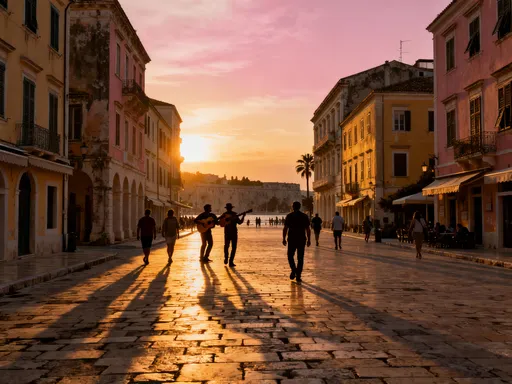
Stepping off the minibus in southern Kyrgyzstan, the air feels different—warmer, drier, and laced with the unmistakable aroma of cumin, grilled meat, and freshly baked bread. Osh greets you not with polished facades or tourist signage, but with raw authenticity. Unlike the capital, Bishkek, which carries a more modern, Soviet-influenced rhythm, Osh pulses with the energy of Central Asia’s heartland. The city lies cradled between sunbaked hills and the winding Ak-Buura River, a geographic and cultural hinge where Kyrgyz, Uzbek, and Dungan communities have lived side by side for generations. This is not a place of forced integration, but of organic coexistence—where languages blend in the marketplace, and traditions enrich rather than divide.
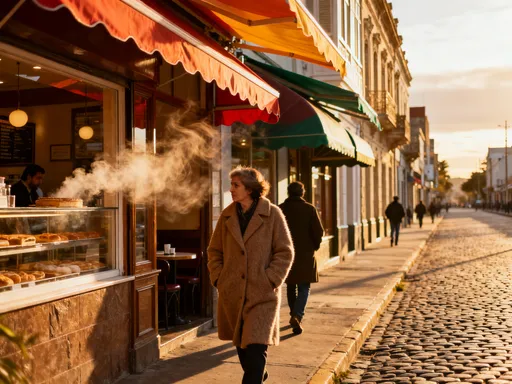
The true essence of Osh reveals itself not in monuments, but in its daily rituals. Food is central to life here, not as spectacle, but as sustenance, celebration, and connection. From dawn until late evening, the city eats—on stools by the roadside, under striped awnings, or gathered around low tables in family-run tea houses. The term *dastarkhan*—a cloth spread on the ground or table to hold food—is more than a dining surface; it’s a symbol of hospitality, respect, and community. In Osh, the dastarkhan is rarely empty. It’s constantly replenished with flatbreads, pickled vegetables, bowls of yogurt, and steaming dishes passed hand to hand.
What struck me most upon arrival was how unselfconscious the food culture felt. There are no ‘Instagrammable’ setups or curated experiences designed for foreign eyes. Instead, every meal unfolds naturally—children eating with their hands, elders pouring tea for newcomers, vendors calling out prices in melodic Uzbek or fluent Kyrgyz. The pace is unhurried, the atmosphere welcoming. This is not performance; it is life. And for a traveler seeking something real, that authenticity is magnetic. It invites you not just to observe, but to sit, to eat, and to belong, even if only for a meal.
Exploring the Jayma Bazaar: A Feast for All Senses
If Osh has a beating heart, it is the Jayma Bazaar—the city’s sprawling, open-air marketplace that has thrived for centuries as a hub of trade and community. More than just a place to buy food, Jayma is a living archive of Central Asian life, where generations gather not only to shop, but to connect, negotiate, and celebrate. Walking through its covered lanes feels like stepping into a sensory mosaic: the crimson glow of dried chili peppers stacked in pyramids, the golden dust of turmeric spilling from burlap sacks, and the pungent perfume of garlic and onions hanging in braids from wooden beams.
But it is the food stalls that truly captivate. Under corrugated metal roofs and faded canopies, vendors work with practiced ease, their hands moving swiftly between pots, pans, and grills. Women in colorful headscarves stretch dough for *laghman* with a rhythm that seems almost meditative, while nearby, men tend to charcoal pits where skewers of marinated meat sizzle and pop. The air is thick with smoke and spice, a fragrance that lingers on clothes and memory long after you’ve left.
What makes Jayma extraordinary is its unscripted vitality. This is not a tourist market with souvenirs and trinkets; it is where locals come to feed their families. Grandmothers inspect melons with discerning fingers, young couples bargain over bundles of fresh herbs, and schoolchildren dart between stalls, sneaking bites of warm halva or sticky rice cakes. I watched a vendor pour hot milk into a cloth sack to strain homemade cheese, then shape it into soft rounds while chatting with a neighbor about the weather. These are not transactions—they are moments of shared life.
For visitors, Jayma offers more than sustenance. It offers immersion. To wander its aisles is to witness the daily rhythm of a city that values flavor, freshness, and fellowship. There are no menus in English, few signs at all, and certainly no digital payment options. But none are needed. A smile, a point, and a willingness to try are all it takes to be welcomed. In a world where travel often feels curated and commercialized, Jayma remains refreshingly real—a place where food is not just eaten, but lived.
The Art of Laghman: Watching Noodles Become Culture
In Osh, a bowl of *laghman* is not merely a meal—it is a testament to craftsmanship, heritage, and the quiet artistry of everyday life. I first encountered it at a humble stall deep within Jayma Bazaar, where a middle-aged vendor worked a lump of dough with the focus of a sculptor. He pulled, twisted, and slapped the elastic mass against his wooden counter, then stretched it into long, glistening strands with a motion so fluid it seemed choreographed. With a final flick of his wrist, he tossed the noodles into a roaring pot of boiling water, all while exchanging jokes with a customer about the morning’s football match.
This hand-pulled noodle dish, served in a savory broth with stir-fried bell peppers, carrots, and tender strips of beef, is a culinary heirloom with roots stretching back to the Dungan people—Chinese Muslims who migrated to Central Asia in the 19th century. Over time, *laghman* was embraced and adapted by local cooks, becoming a staple across Kyrgyzstan and Uzbekistan. But in Osh, it is more than a regional specialty; it is a symbol of cultural fusion, a dish born from movement and made meaningful through shared enjoyment.
What sets authentic *laghman* apart is its texture—chewy, springy, with just the right resistance between the teeth. Machine-made noodles cannot replicate this quality. The hand-pulling process aerates the dough, creating a structure that absorbs broth without turning soggy. Served in a chipped enamel bowl with a side of spicy chili oil and a wedge of fresh onion, it is humble in presentation but profound in flavor. As I ate, seated on a plastic stool with steam rising into the cool morning air, I realized I wasn’t just tasting food—I was tasting history, resilience, and the quiet pride of a people who value skill passed from hand to hand.
What moved me most was the lack of pretense. The vendor didn’t pose for photos or explain his technique. He simply cooked, served, and moved on to the next order. Yet in that simplicity lay a deeper truth: in Osh, food is not a performance for outsiders. It is a daily act of care, a way of honoring tradition without fanfare. To eat *laghman* here is to participate in something enduring—not just a recipe, but a rhythm of life that has sustained families for generations.
Shashlik Under the Stars: Nighttime Grills and Local Rituals
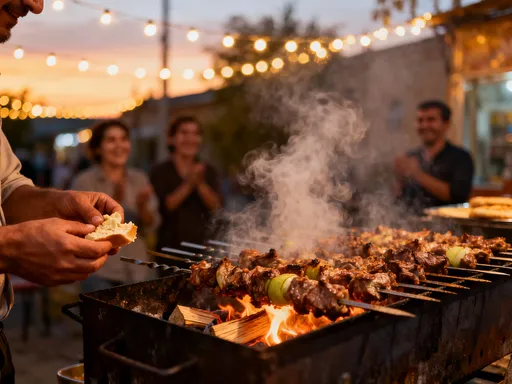
As the sun dips behind the arid hills surrounding Osh, a new rhythm begins. The daytime bustle of the bazaar gives way to the soft glow of string lights and the crackle of open flames. This is when the city’s *shashlik* culture comes alive—grills ignite along the waterfront, near the Sulaiman-Too Shrine, and on quiet street corners where locals gather after work. I followed the scent of smoldering applewood one evening and found myself at a nameless stall, where skewers of marinated lamb rotated slowly over glowing coals.
*Shashlik*, the Central Asian answer to kebabs, is deceptively simple. Cubes of meat—usually lamb or beef—are marinated in onion and salt, then threaded onto metal skewers and grilled over wood or charcoal. There are no elaborate spice blends, no sauces for dipping. The flavor comes from quality and technique: the freshness of the meat, the evenness of the char, the patience to let it cook slowly. The lamb I tried was sourced from nearby pastures, where animals graze on wild herbs and clean mountain air. The result was tender, smoky, and deeply satisfying—a reminder that sometimes, less is more.
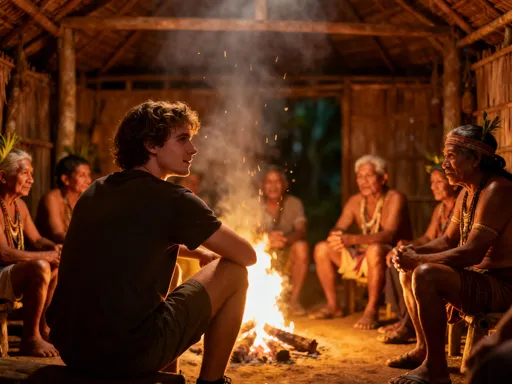
But *shashlik* is about more than meat. It is a social ritual, a moment of connection. I sat at a low table with a group of local men who invited me to join without hesitation. We shared warm *lepyoshka* bread, sliced onions, and glasses of sweet green tea. Conversation flowed in a mix of Uzbek and broken Russian, punctuated by laughter and gestures. No one asked where I was from or why I was traveling. Instead, they offered more meat, refilled my glass, and nodded in approval as I ate with my hands—following local custom.
This spirit of generosity is known as *mehmanvandlik*—the Central Asian tradition of hospitality. It is not performative, nor is it reserved for special occasions. It is woven into the fabric of daily life. To be a guest, even an accidental one, is to be treated with honor. In that moment, under a canopy of stars and fairy lights, I felt a profound sense of belonging. It wasn’t the destination that mattered, but the act of sitting together, sharing food, and being seen. That night, I didn’t just eat *shashlik*—I experienced a way of life built on openness, warmth, and trust.
Sweet Endings: Halva, Samsa, and the Joy of Street Sweets
No meal in Osh feels complete without something sweet. While desserts in Western cultures often serve as an afterthought, here they are an essential finale—a final act of generosity that lingers on the tongue and in the heart. From the dense, crumbly halva sold in flat slabs at market corners to the flaky, oven-baked *samsa* filled with apricots or raisins, Osh’s sweets are humble yet deeply satisfying, crafted with care and tradition.
One morning, I followed the scent of caramelized sugar to a tiny stall tucked between fruit vendors. An elderly woman stood behind a metal tray, pouring hot syrup over a bed of crushed almonds and sesame seeds, then smoothing the mixture with a wooden spatula. With practiced hands, she cut it into small squares, wrapping each in wax paper. She called it *nogli*, a simple confection that requires only a few ingredients but yields a rich, nutty sweetness. As I took my first bite, the crunch gave way to a melt-in-the-mouth tenderness, and I understood why this treat has endured for generations.
Another favorite became *samsa*, though not the savory version stuffed with meat and onions. Here, bakers offer sweet variations—some filled with dried apricots from local orchards, others with a spiced mix of raisins and pumpkin. They are baked in round clay ovens called *tandyr*, which radiate intense, even heat, giving the pastry a golden, blistered crust. I often bought one fresh in the early afternoon, still warm from the oven, and ate it while walking along the riverbank. Each bite was a balance of sweetness and earthiness, a reminder that pleasure doesn’t require extravagance.
What I came to appreciate most about Osh’s sweets is their role in daily life. They are not reserved for birthdays or holidays. A piece of halva is shared with tea in the morning. A warm samsa is handed to a child after school. These treats are woven into the rhythm of ordinary moments, small joys passed from hand to hand. In a world that often chases novelty, Osh’s desserts are a quiet celebration of continuity—a way of saying, *Life is sweet. Take a bite.*
Dining Like a Local: Practical Tips for an Immersive Experience
To truly taste Osh, you must step beyond the role of observer and become a participant. That means leaving behind the comfort of hotels and international menus and embracing the pace, practices, and pleasures of local dining. The first rule: seek out *chayhanas*—family-run tea houses that serve as community hubs. These are not fancy restaurants, but cozy, no-frills spaces where plastic tables are wiped down between meals and the menu is often recited rather than written. The food is home-style, generous, and deeply flavorful.
Cash is essential. Credit cards are rarely accepted, even in larger establishments. Carry small bills, as vendors may not have change for larger notes. Tipping is not expected, but leaving a little extra is a quiet way to say *rahmat*—thank you. Another key tip: go early. The best *plov*, a fragrant rice pilaf cooked with carrots, raisins, and lamb, is often sold out by mid-afternoon. Dairy products like fresh kaymak (clotted cream) and sour yogurt appear at dawn markets and vanish quickly. Arriving in the morning ensures you get the freshest offerings and a front-row seat to daily life.
Don’t be afraid to point and smile. Many vendors do not speak English, but food transcends language. A gesture toward a steaming pot or a nod at a neighbor’s plate is often enough to place an order. Hygiene is generally good at busy stalls with high turnover—locals know where to eat, and their presence is the best endorsement. Look for places crowded with workers on lunch break or families sharing a meal. If a stall is popular with residents, it’s likely safe, delicious, and authentic.
Finally, slow down. Meals in Osh are not rushed. They unfold over tea, conversation, and multiple courses. Accept the pace. Let the hours stretch. This is not inefficiency—it is intention. To eat like a local is to savor not just the food, but the company, the moment, the connection. It is to understand that a meal is not fuel, but a ritual—one worth taking time to honor.
Why Osh’s Food Scene Matters—Beyond the Plate
Osh’s cuisine is more than a collection of recipes. It is a living archive of resilience, identity, and connection. In a region often overlooked by mainstream tourism, its food tells stories of migration, trade, and peaceful coexistence. The Dungan influence in *laghman*, the Uzbek touch in *plov*, the Kyrgyz traditions of dairy farming—each element reflects a chapter in the city’s layered history. These dishes did not emerge in isolation; they evolved through exchange, adaptation, and mutual respect.
Every shared meal in Osh reinforces community. The dastarkhan is never meant for one. It is a space of inclusion, where strangers become guests and guests become family. In a world increasingly defined by division, this tradition offers a quiet counterpoint—a reminder that breaking bread together can be an act of unity. For travelers, engaging with this culture is not just about satisfying curiosity. It is an invitation to slow down, to listen, to participate in something deeper than sightseeing.
When I left Osh, I carried no souvenirs, no trinkets. Instead, I carried the memory of flavors—the smokiness of shashlik, the chew of hand-pulled noodles, the sweetness of fresh halva. But more than that, I carried a feeling: the warmth of being welcomed, the joy of connection, the quiet pride of having shared a table with people whose lives moved at a different, more meaningful pace. Osh taught me that the most powerful journeys are not measured in miles, but in moments—of taste, of trust, of gratitude. And as I whisper *rahmat* in my heart, I know I will return, not for the sights, but for the soul of the Silk Road, served one plate at a time.